In Ridgeland, The Crack In The Hallway Isn't What Costs You The Sale
August 20, 2026
August 20, 2026
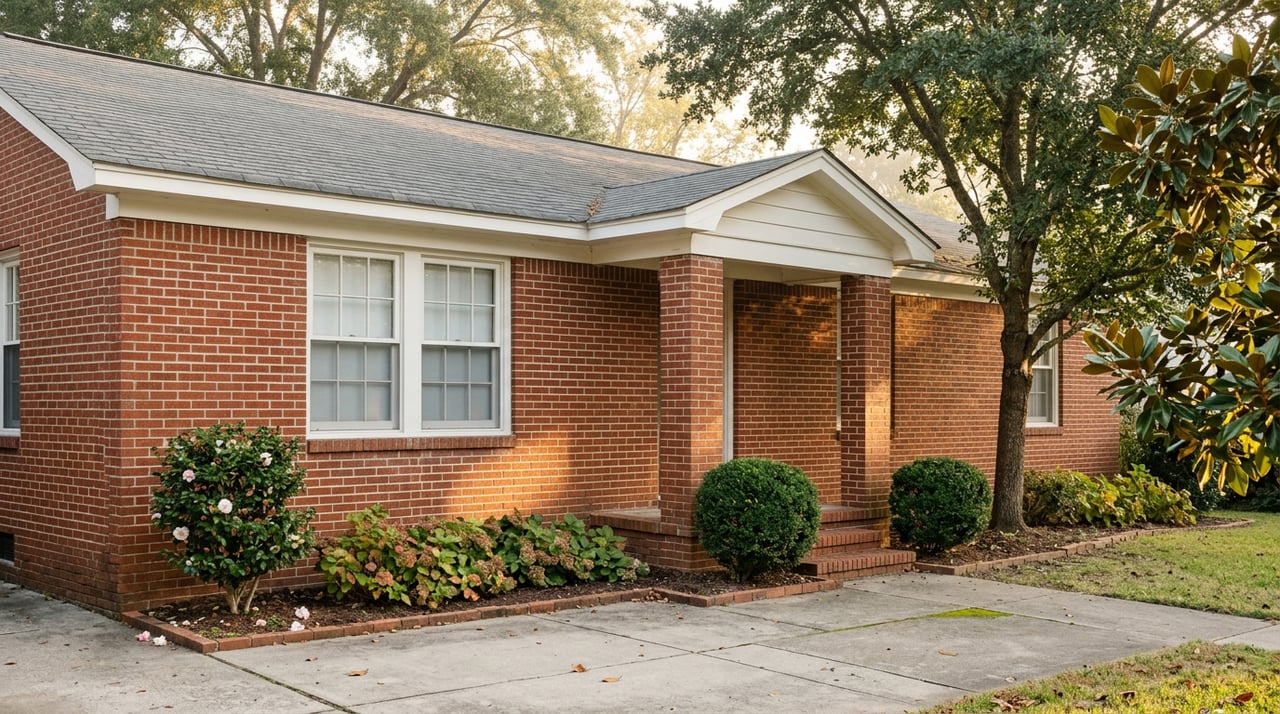
A seller in one of Ridgeland's older brick ranch neighborhoods stands in the hallway before her first showing, looking at a hairline crack near the baseboard that's been there, as far as she can remember, since her kids were in elementary school. It hasn't grown. A contractor patched it once, years ago, and it never came back. Still, she hesitates over the disclosure form. Does this count? Will a buyer see the word "foundation" checked and walk?
That hesitation is the wrong worry, and it's the one nearly every seller in an established Ridgeland neighborhood carries into their first listing conversation. The actual risk isn't the crack. It's what happens if that information reaches the buyer at the wrong moment in the transaction.
Mississippi requires sellers of one to four unit residential properties to complete a Property Condition Disclosure Statement under Miss. Code § 89-1-501 et seq. The form asks, plainly, whether you know of past or current problems with the structural elements of the home, foundation included. The statute's own language is that this disclosure has to reach the buyer "as soon as practicable" before the title transfers, and the standard Mississippi Real Estate Commission form is built to make sure that happens before or at the moment an offer is accepted.
Sellers tend to read that foundation checkbox as a confession. In most of Ridgeland, it's closer to a formality. If your home was built in the era when Friendship Park and the neighborhoods around Old Town Ridgeland went up, the honest answer to "has this foundation ever moved" is very often yes. The form isn't asking whether your house is exceptional. It's asking whether you're being straight about a condition that describes most of the housing stock around you.
The reason traces back to what's under the slab, not what a previous owner did wrong. A 1970s to 1990s U.S. Army Corps of Engineers study mapped the Yazoo clay formation as running entirely beneath the city of Ridgeland, along with Jackson, Flowood, Madison, Flora and Canton. This is the same expansive clay that gives the region its reputation among structural engineers: it can swell by more than 200% when wet and generate up to 25,000 pounds of pressure per square foot against a foundation. Research from the Mississippi Department of Natural Resources has been blunt about the fix: removing the clay itself is, in most cases, either impossible or not economically practical, which is why builders and engineers in central Mississippi have spent decades designing around it instead of trying to eliminate it.
That's a geology problem, not a workmanship problem, and it doesn't respect subdivision lines. It shows up differently depending on when and how a house was built, which is worth knowing before you sit down with the disclosure form.
| Ridgeland era / area | Typical construction | What the foundation section usually looks like |
|---|---|---|
| Old Town Ridgeland (pre-1950s core, clustered near the old Illinois Central rail line) | Original village-era homes, later additions and remodels | Often a long ownership history with multiple prior repairs on record |
| Friendship Park and similar 1970s-80s subdivisions (brick ranches, slab-on-grade) | Slab foundations built before modern void-form techniques were standard | Frequently a documented past repair, sometimes decades old and stable |
| Newer gated developments like Bridgewater and Montrachet | More recent construction with contemporary foundation engineering | Fewer disclosed issues, though still built on the same clay belt |
None of these categories is a red flag on its own. The pattern simply tells a buyer's agent, and a buyer, what kind of conversation to expect before they even open the form.
Here's the part of Mississippi's disclosure law that catches sellers off guard, and it has nothing to do with the size of the crack. Under Miss. Code § 89-1-503, if a seller delivers the disclosure statement after the buyer has already made a formal purchase offer, the buyer gets three days (if delivered in person) or five days (if mailed) to cancel that offer without penalty, no questions asked. It doesn't matter how minor the issue is. It doesn't matter if the repair was flawless. If the paperwork lands after the ink is dry on an accepted offer, the buyer has a clean legal exit, and everything that happened before that point, the accepted price, the moving truck reserved, the closing date circled on a calendar, is suddenly optional for them and locked in for you.
This is why the timing of disclosure matters more than the content of it. A seller who hands over a complete, accurate PCDS before an offer is ever written has taken that cancellation window off the table entirely, because there's no late-arriving surprise for the buyer to react to. A seller who waits, hoping a clean-looking house won't invite the question, and then discloses only after a buyer's inspector finds evidence of a repair, has handed that same buyer a built-in escape hatch at the worst possible moment in the transaction.
Mississippi's law does give sellers room to be honest about uncertainty. Under § 89-1-507, if something is genuinely unknown to you and you've made a reasonable effort to find out, you're allowed to say so rather than guess. But "unknown" only protects you if it's true. Under § 89-1-523, a seller who willfully or negligently skips a known material defect can be held liable for the buyer's actual damages after closing, which is a considerably worse outcome than a slightly awkward line item on a form.
This is where the local repair history actually works in a seller's favor rather than against it. A foundation issue with a paper trail, an inspection report, a paid invoice, a transferable warranty, tells a buyer the story is finished. A foundation issue with no documentation at all, discovered cold during a buyer's own inspection, tells the buyer the story might not be.
Ridgeland has no shortage of firms that have built their reputation on exactly this kind of long-term paperwork. Ewing & Ray Foundation Services has operated in the region since 1968 and is now run by a second generation of the same family, which means a repair they performed decades ago still has a name and a phone number behind it if a buyer's attorney wants confirmation. Structural Solutions, based in Ridgeland, backs its slab and conventional foundation work with a lifetime transferable warranty, which is the single most useful document a seller can hand a buyer's agent, because it converts "there was an issue" into "the issue is covered, and so are you."
The cost side supports this too. Ridgeland homeowners spend an average of around $1,988 on foundation repair, according to Today's Homeowner's local cost data. Set that figure next to a median home value north of $300,000 in the established neighborhoods on the east side of the city, and the math stops looking like a crisis. It looks like routine maintenance in a place where the ground itself asks for it.
Sellers who move through this cleanly tend to gather the same handful of things well before a showing is ever scheduled:
None of this needs to be dramatic. It just needs to exist, and it needs to reach the buyer before an offer does, not after.
The house in Friendship Park with the patched hallway crack and the house in Bridgewater with no foundation history at all are both, in the eyes of Mississippi's disclosure law, telling a buyer the truth about the same clay. The seller who gets ahead of the timing, who hands over a complete, documented disclosure before an offer lands rather than after, is the one who keeps control of the calendar. The one who waits is the one who finds out, three or five days later, that the buyer had the whole time.
If you're weighing a sale in Ridgeland this year and want to talk through what your own disclosure history actually looks like on paper, Karen P Godfrey and the team at Godfrey Realty Group have walked plenty of families through exactly this conversation. Let's talk about your next move.
Stay up to date on the latest real estate trends.
We pride ourselves in providing personalized solutions that bring our clients closer to their dream properties and enhance their long-term wealth. Contact us today to find out how we can be of assistance to you!